Overview
Unwind is a free iOS app for people caring for reactive or anxious dogs. Owners can log walks, enrichment, incidents, and care activities, then see a daily status, personalized suggestions, and patterns across time.
The idea came from a serious incident between dogs in my household. A behavioral specialist helped us recognize warning signs that had been building over several days, but that we hadn’t connected at the time. I wanted to give owners a better way to understand what was happening without adding more work to an already demanding situation.
I led the customer research, defined the product, designed the experience, and built the app independently under Identity Mad. Unwind reached the App Store approximately six weeks after development began, and I’ve continued expanding its capabilities since launch.
Problem
Managing a reactive dog involves paying attention to more than individual incidents. Changes in routine, stressful encounters, physical activity, and recovery can all contribute to how a dog responds to its environment. These experiences are difficult to track consistently, especially when multiple people share responsibility for the same dog.
Existing tools weren’t solving that problem for me. The apps I tried required too much effort to maintain, and most focused on recording activities or measuring progress without helping explain how events might be connected.
Research with other owners reinforced the challenge. In a survey of 137 people managing dogs with behavioral difficulties, 57% had wanted or attempted to track behavior without successfully establishing the habit.
There was an opportunity to make tracking easier while giving owners something useful back for the effort.
Approach
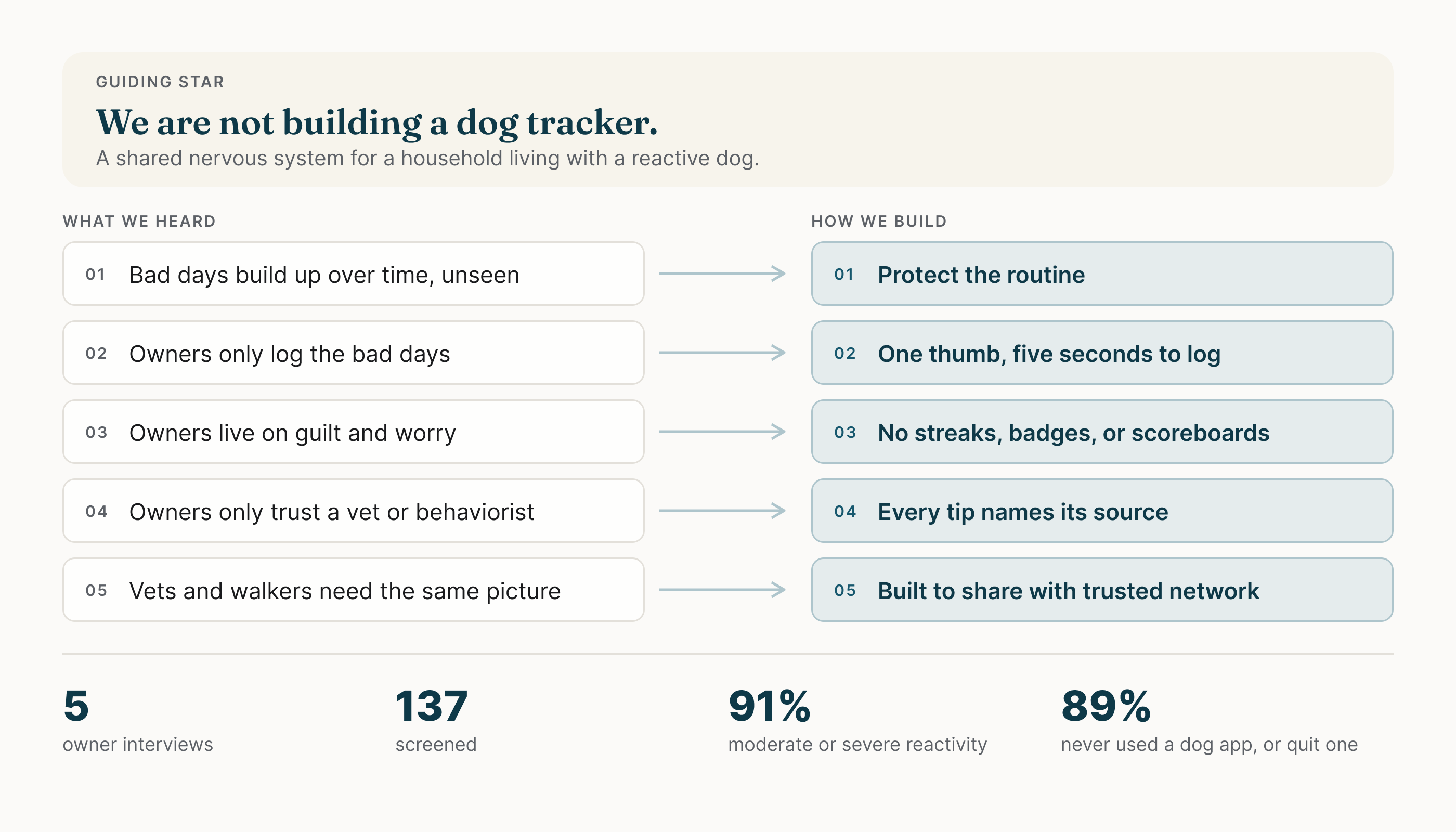
I recruited and interviewed reactive dog owners to learn how they managed behavior, what information they tracked, and how they worked with trainers and other caregivers. I synthesized those interviews alongside the survey findings to identify recurring needs and opportunities.
The research shaped four principles for the product. Unwind needed to help owners protect routines, understand how experiences accumulate, record information with minimal effort, and share that information with the people caring for their dogs. These principles moved the product beyond basic activity tracking and helped define its behavioral model and overall experience.
I developed the app through rapid iterations, using it daily with my own dogs to identify problems and refine the experience. As the underlying logic became more complex, I introduced written product definitions and scenario-based tests to evaluate changes against the intended behavior.
Key decisions
1. Model accumulation and recovery, not just individual events
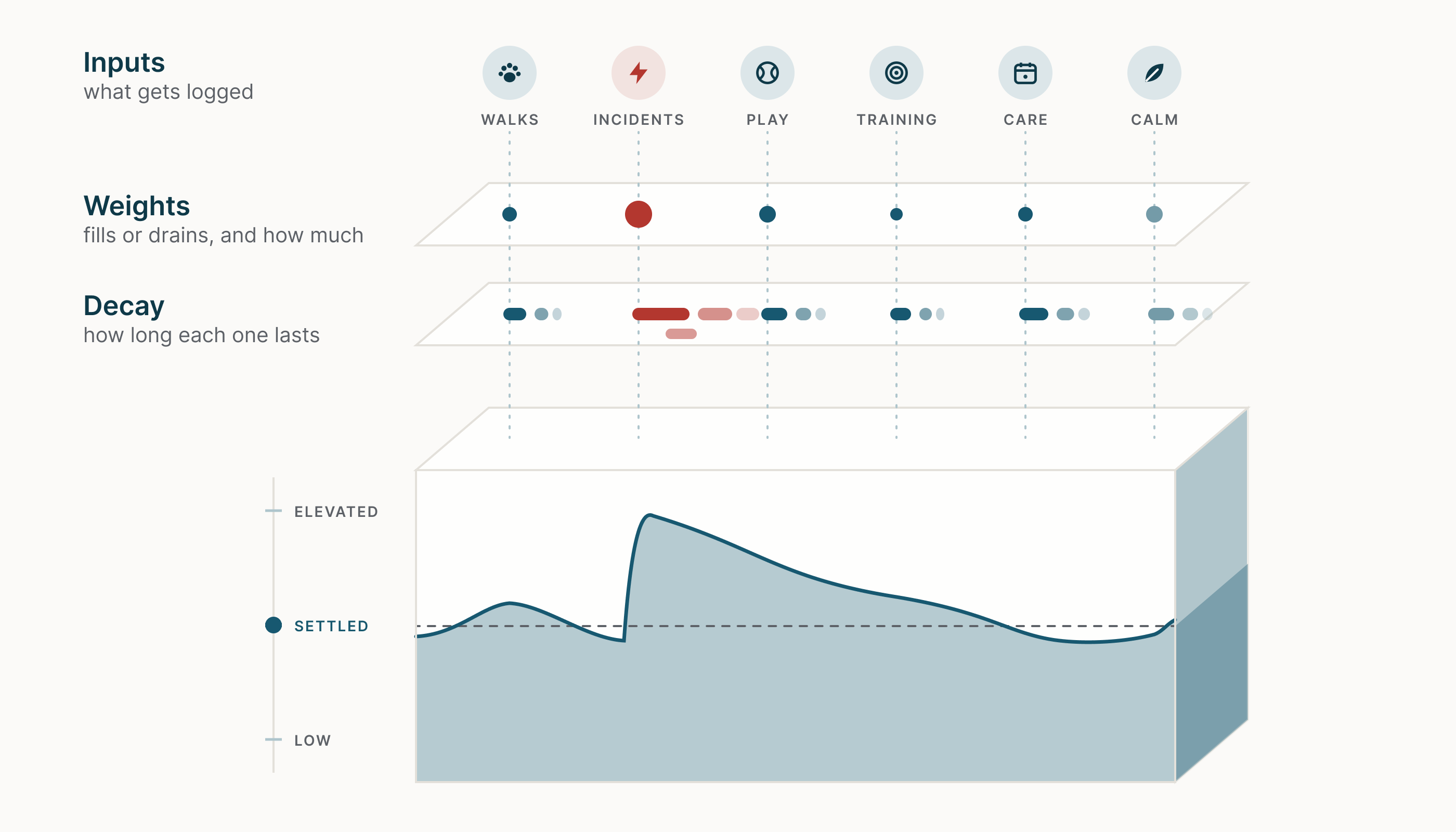
I developed the Gremlin Model to estimate a dog’s current state based on activities and experiences over time. It accounts for activating and regulating events, individual baselines, and effects that accumulate or gradually fade. The model uses weighted rules and heuristics rather than a clinically validated measurement of stress, providing a consistent way to interpret activity and recovery patterns.
2. Replace scores and streaks with supportive guidance
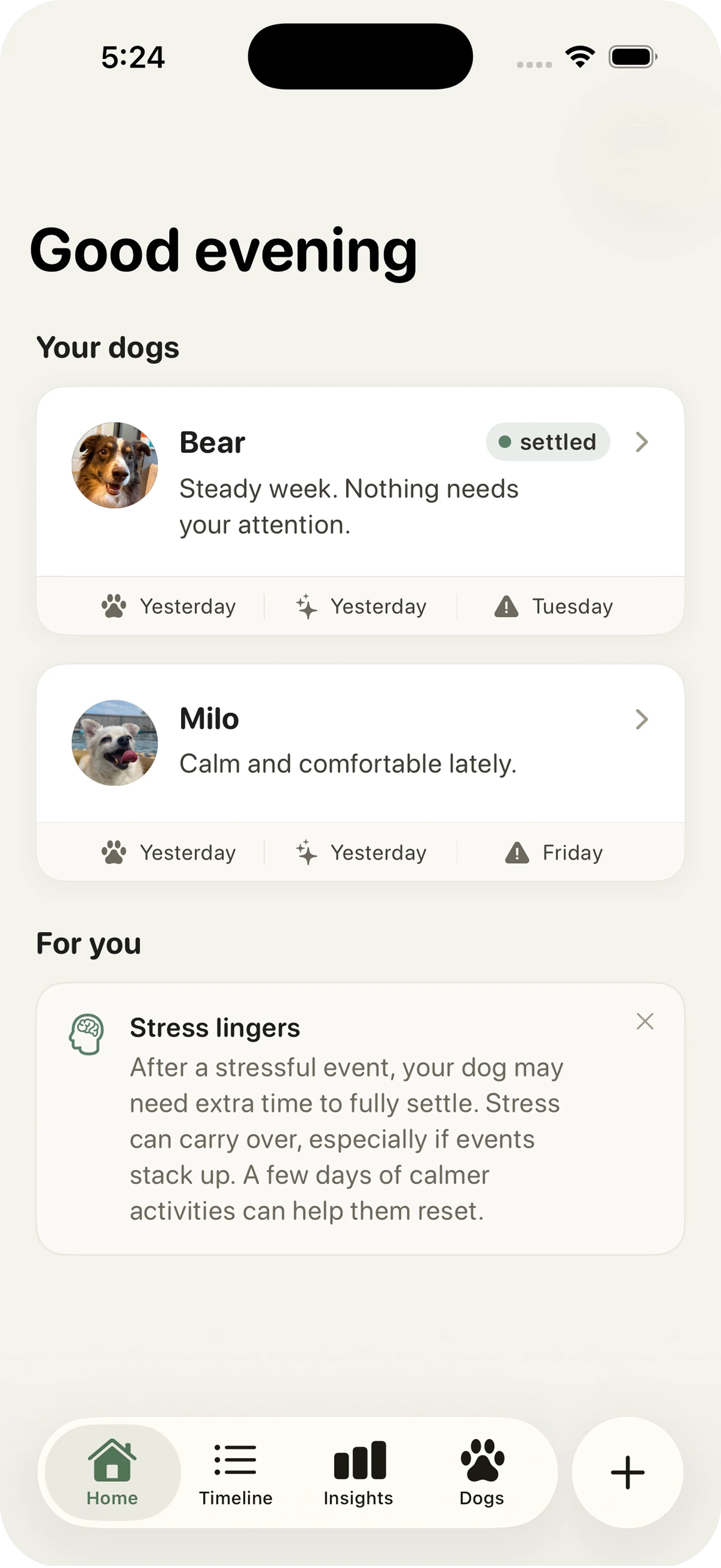
Owners already managing behavioral challenges don’t need another measure of how well they’re doing. Although the model calculates a numerical value internally, the interface presents a general status, its direction, and a relevant suggestion. I also removed streaks and progress-oriented mechanics that could encourage score-chasing or make missed activities feel like failures.
3. Replace CloudKit when sharing requirements expanded
The original CloudKit implementation supported household sharing, but multiple households and external trainer access required more flexible permissions and server-side data management. I migrated to Supabase and Postgres, documenting 34 technical decisions and organizing the migration into 30 implementation steps. This gave the app a more extensible foundation while preserving existing user data.
4. Separate trainer access from household membership
Trainers needed visibility into a dog’s history without inheriting the permissions of someone living in the household. I designed a separate, read-only access model that lets owners grant access without exposing private household information or allowing trainers to modify records. The portal uses the same calculated statuses and recommendations displayed in the app.
Solution
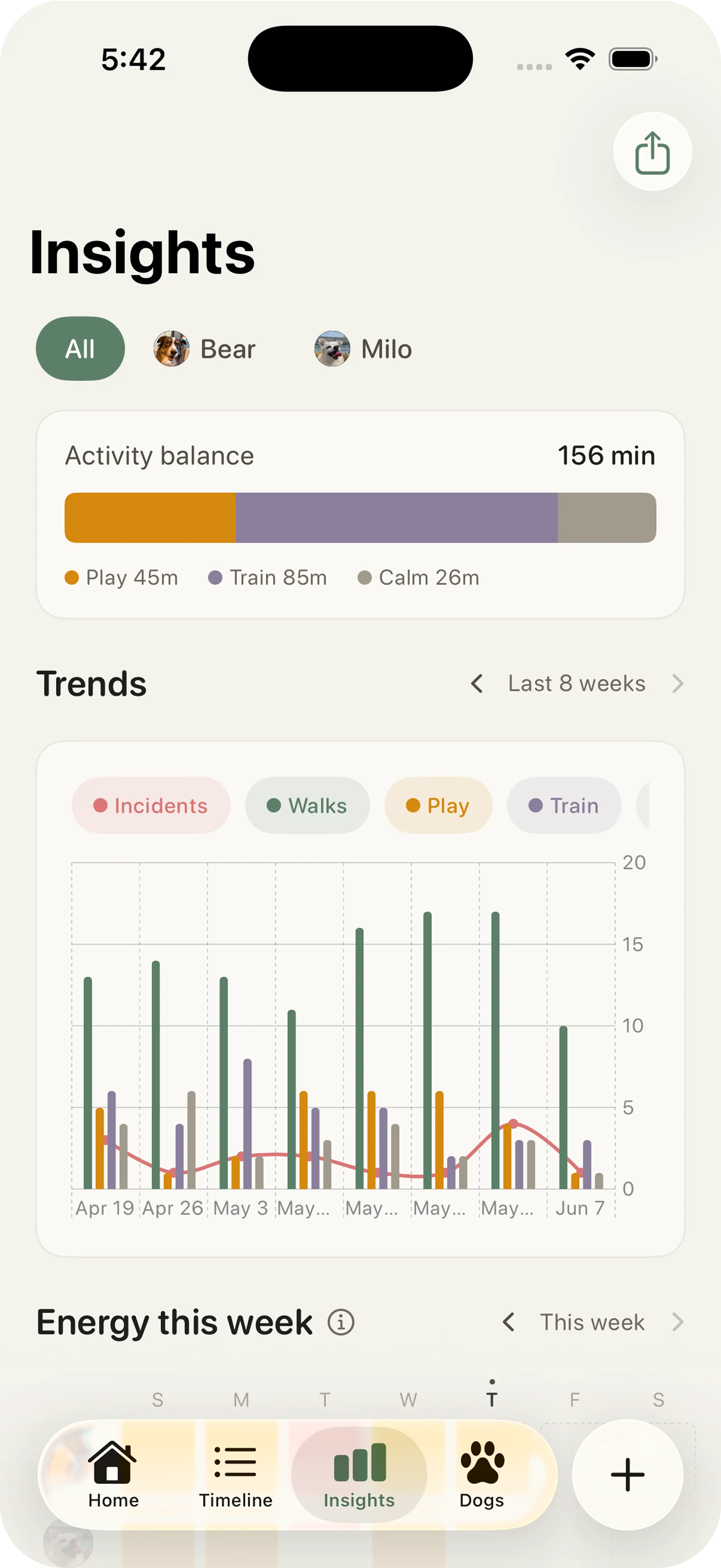
Unwind brings activity logging, daily guidance, weekly insights, and household sharing into one iOS experience, including an Apple Watch companion for logging on the go.
The latest completed update extends the experience to multiple households and introduces a web portal where trainers can review a dog’s shared history. That update is awaiting release.
Outcomes
- Launched an iOS app in approximately six weeks. I took Unwind from initial development to the App Store independently, then continued expanding the product through major releases.
- Developed a behavioral model informed by customer research. The Gremlin Model connects daily activities, incidents, and recovery to provide personalized guidance without exposing a numerical score.
- Expanded the product beyond individual tracking. Household sharing is live, with multi-household support and read-only trainer access completed for the next release.
- Established a testable foundation for continued development. The app includes scenario-based model validation, 1,143 Swift unit tests, and 102 database test assertions covering the backend’s access rules.
Unwind is still early, with limited adoption and no outside trainer usage of the portal yet. The results demonstrate product delivery and technical feasibility, while the longer-term impact on owner behavior and dog care remains to be measured.