Overview
LegalZoom forms more LLCs than any other provider, but much of the long-term value comes from subscriptions sold alongside the filing. Registered agent service was the largest of those offers, sold as a $199 annual subscription and presented as one of several paid offers before checkout.
I was the product manager for the LLC funnel and led the experiment that moved the offer after checkout. I based the test on customer research I had run a year earlier, found a way to launch it without waiting for a larger platform project, and worked with data science and finance to evaluate the tradeoff between formation conversion and subscription revenue.
The change increased LLC conversion 13.3%, supporting the company’s priority to grow market share without giving up revenue. Although fewer customers signed up for registered agent service, data science estimated that the additional formations made up for the lost subscription value. We rolled out the change, and the offer remains after checkout today.
Problem
The registered agent offer created a difficult tradeoff. It generated more subscription revenue than any other offer before checkout, but it was also one of the largest points of drop-off and the hardest for customers to understand.
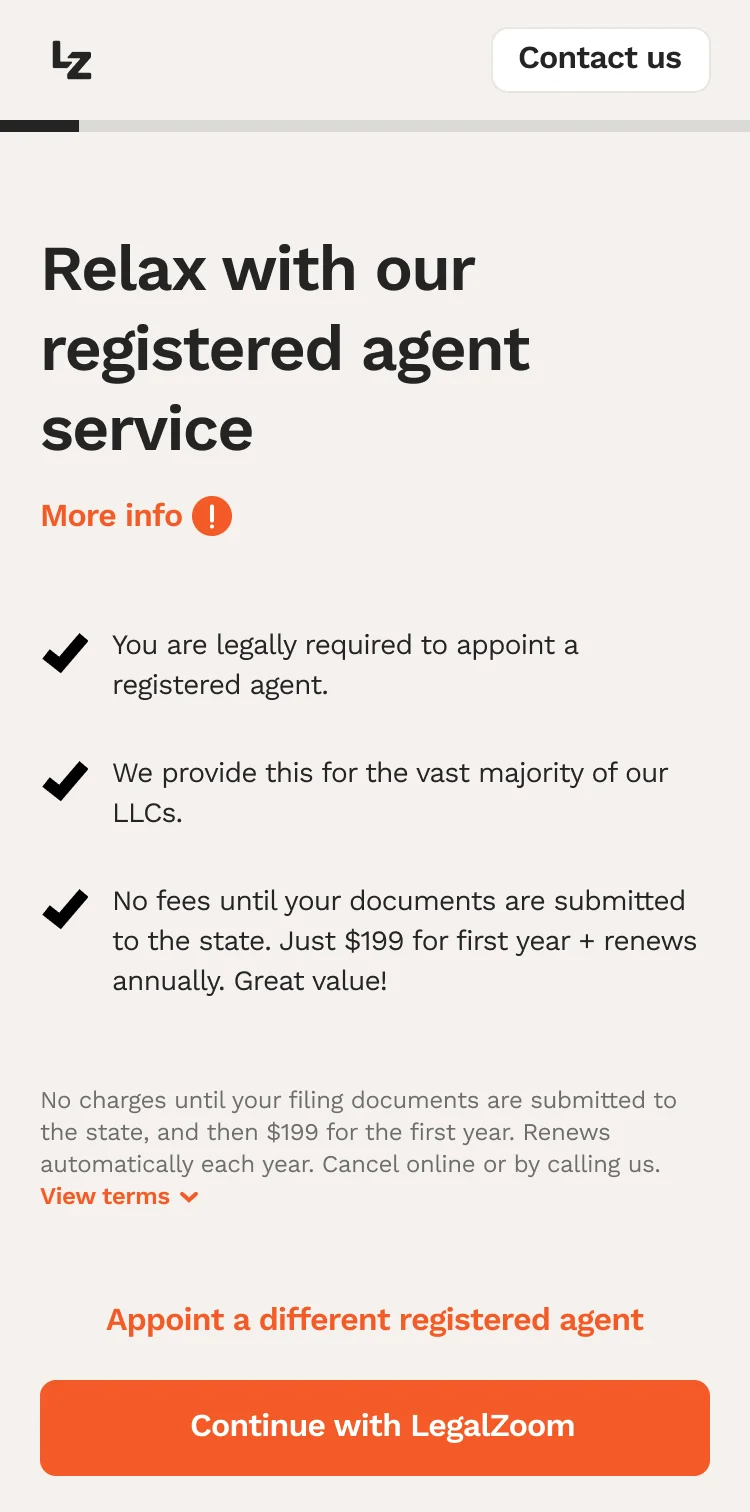
The problem was concentrated among LegalZoom’s largest customer segment. The free formation option was the company’s most popular choice, especially on mobile, where it accounted for 80% of orders. Only 53% of customers choosing the free option signed up for registered agent service, compared with 81% of customers choosing the highest priced option. The offer was creating the most friction for the customers least likely to buy it.
We had already tested the several ideas. Offering the first year free improved conversion, but the additional formations did not make up for the subscription revenue we gave up. A clearer screen performed no better than the original. Those results suggested that changing the price or redesigning the screen would not solve the problem at an acceptable cost. The service was valuable, but we were asking customers to consider it too early.
Approach
The idea began with a broader investigation into mobile conversion. In spring 2023, mobile customers converted at about one-third the rate of desktop customers, so I analyzed the purchase process and ran moderated sessions in which customers talked through the experience using LegalZoom and competitors.
I expected to find problems with the mobile interface. Instead, customers repeatedly stalled at the registered agent offer after choosing free formation. One participant described the $199 subscription as “the catch.” The first design test that followed did not improve conversion, but the research continued to point to the timing of the offer.
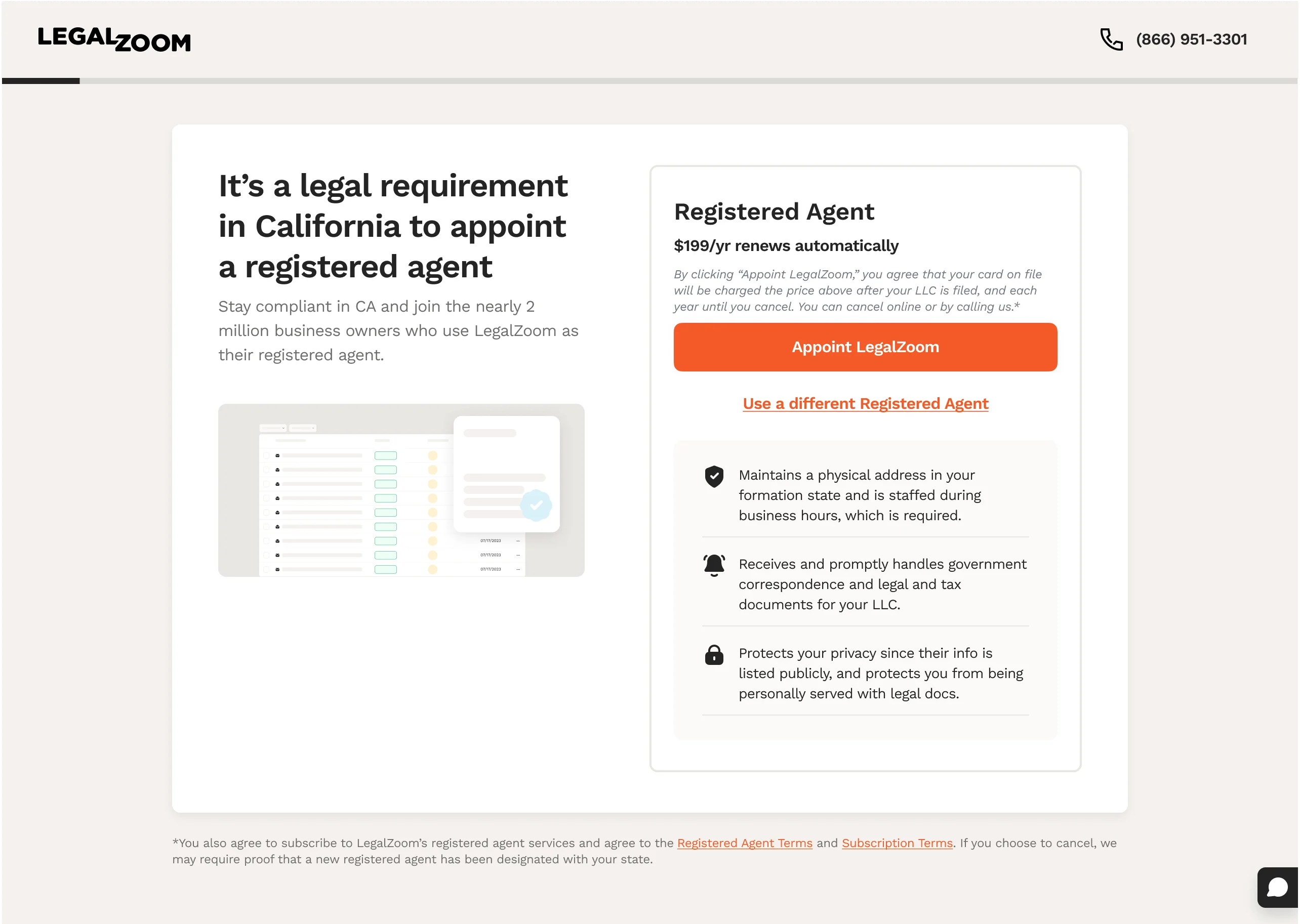
Later that year, we added a second chance registered agent offer after checkout for customers who had declined it earlier. Four percent accepted, which validated that the service could sell after the initial purchase.
I used those findings to propose a broader test: remove the offer from the steps before checkout for every customer and make it the first offer afterward. Before launch, product, data science, and finance agreed to evaluate conversion, registered agent signups, and estimated one-year lifetime value.
Key decisions
1. Recommend removing our highest-value offer from the purchase process
During a planning discussion, I was asked what I would change if nothing were off limits. My answer was to remove the registered agent screen.
The recommendation carried real risk because the screen generated substantial subscription revenue, and we expected fewer customers to sign up if we moved it. However, it was also the largest remaining source of abandonment, and our research and experiments gave me little reason to believe another redesign would change that. We were selling the right service at the wrong time.
2. Reuse the post-checkout experience we already had
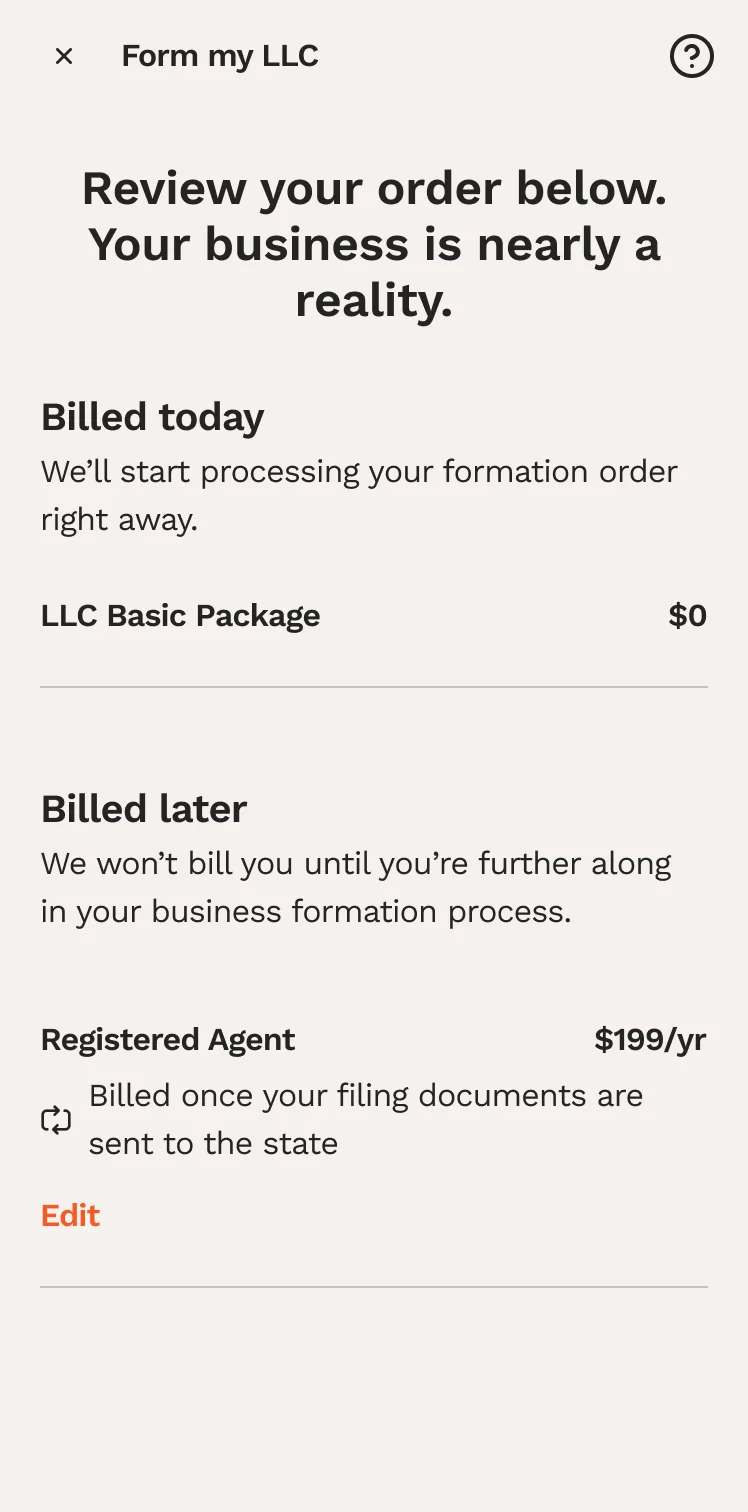
The roadmap assumed that moving subscription offers after checkout required building a new payment experience, which put the work at least a quarter away. Registered agent service was not billed until a customer’s documents went to the state, and we already had a post-checkout screen from the second-chance offer. Reusing it turned a larger platform project into a three-week experiment.
The compromise was that the screen had been designed for customers who had already declined the service, not those encountering it for the first time. That limitation helped us launch quickly and left room to improve the experience later.
3. Test the pattern before optimizing the new screen
After the registered agent test, the obvious next step was to improve its new post-checkout screen and recover some of the lost signups.
I recommended testing the same move with the compliance offer first, even though it meant delaying that optimization. A similar result would tell us whether we had found a broader rule about where offers belonged or simply fixed one difficult screen. The compliance test increased conversion 10.7%, and the roadmap expanded to moving most remaining offers after checkout.
Solution
Registered agent service became the first offer after checkout for every LLC customer. We reused the existing post-checkout screen and rewrote the copy for someone seeing the service for the first time. The purchase process became one screen shorter and no longer included one of its largest points of drop-off.
Outcomes
The experiment included nearly 89,000 customer sessions.
- LLC conversion increased 13.3%. The largest gains came from mobile customers at 17.8% and customers choosing the free formation option at 16%.
- Registered agent signups fell from 73% to 45%, but customers who signed up were more likely to go on to pay for the service.
- Estimated one-year lifetime value remained within a few points of flat after data science accounted for completed billing and refunds. Follow-up analysis found that moving the offer back before checkout would require a signup rate 26% higher than the best previous design to break even.
- We rolled the change out to every LLC customer, and registered agent service remains after checkout today.