Overview
LegalZoom helps individuals and small businesses access legal services, from forming an LLC to creating a will. My Account is the post-purchase experience where customers track orders, access documents, and manage ongoing services.
By 2021, the platform was outdated, fragmented across devices, and difficult to extend. The company had discussed rebuilding it for years, but previous efforts struggled to get past scoping. I led the rebuild, defining the initial scope, shaping requirements, and coordinating delivery with design and engineering.
We shipped the first release in four months and, within a year, migrated millions of customers to the new platform, establishing a foundation for ongoing product development.
Problem
My Account was originally designed to deliver one-time transactions and hadn’t kept pace with LegalZoom’s expanding subscription services. Desktop, mobile web, and native apps had evolved separately, making new functionality difficult to introduce and complicating customer support.
Customers struggled to track their orders, understand what action was needed, or even access their accounts without resetting a password. General order-status questions alone accounted for 15% of support calls and 46% of chats.
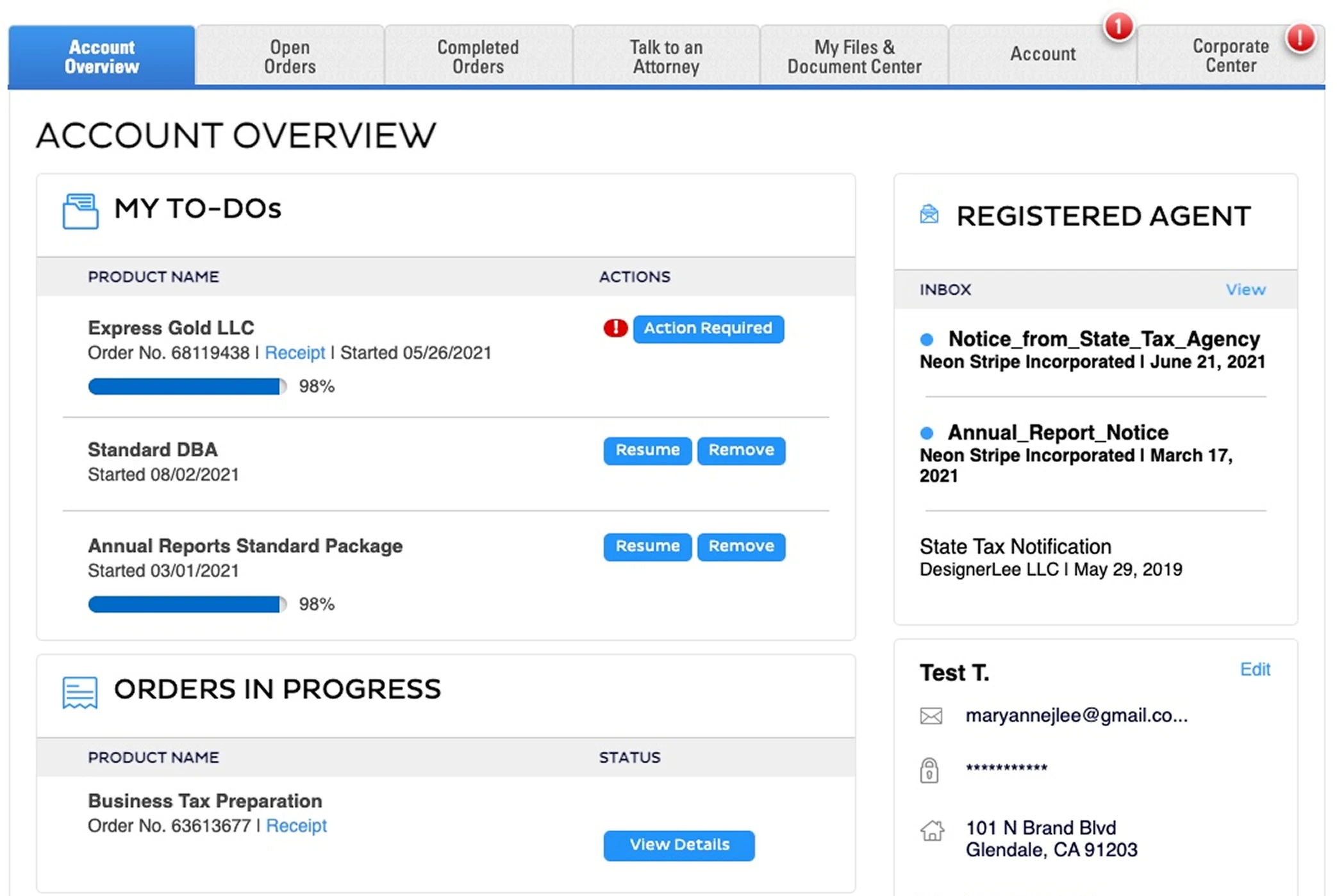
Additionally, attempts to rebuild the experience never took off, as scope kept expanding given every product line had different requirements and expectations. We needed a way to modernize the platform, improve customer self-service, and support new functionality without rebuilding everything at once.
Approach
We began with a five-day design sprint, including interviewing customers and sharing early concepts, to explore what the post-purchase experience could be.
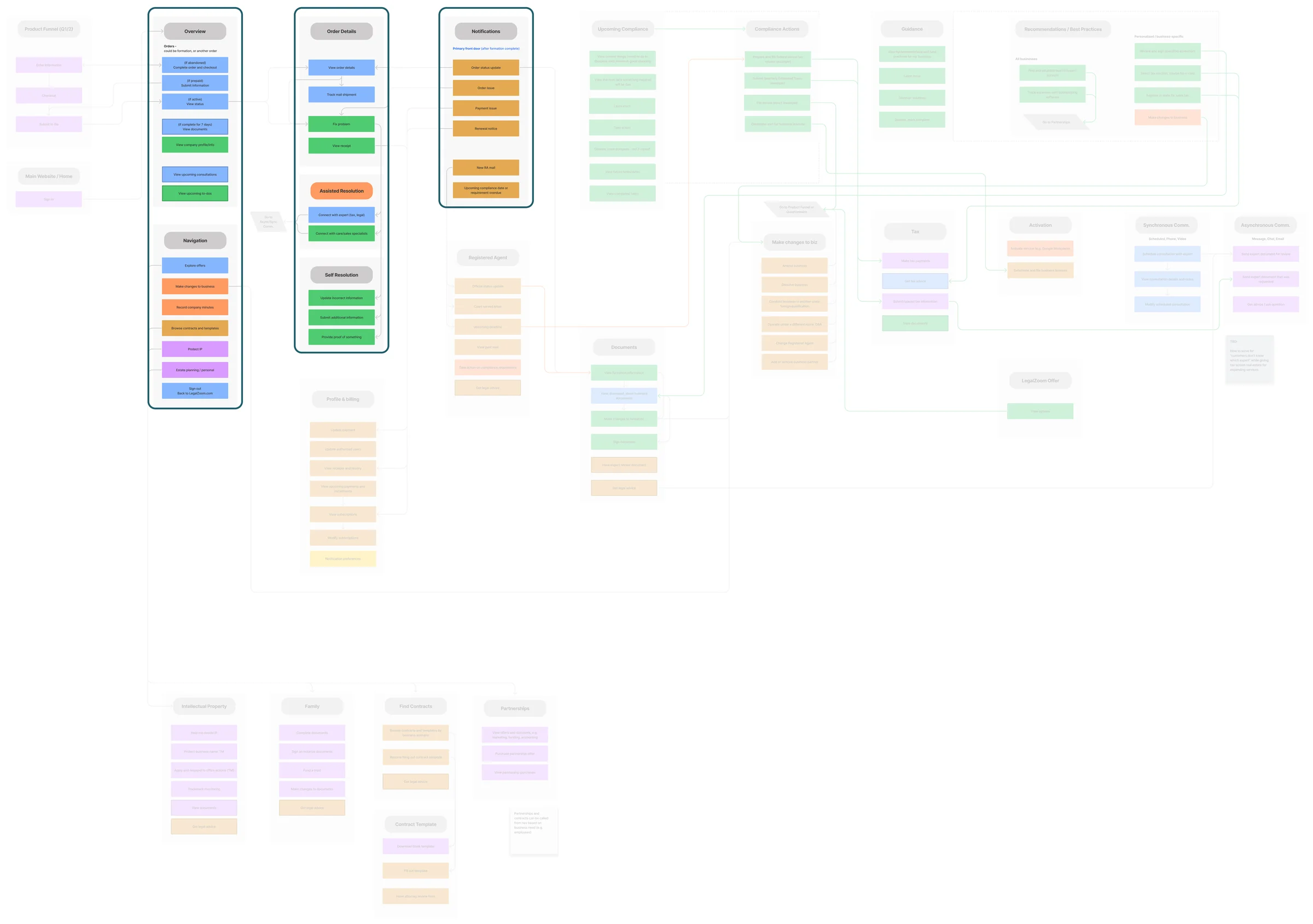
I developed a breadboard mapping screens, actions, and dependencies across LegalZoom’s product lines. It helped distinguish what needed to be rebuilt, what could remain in the legacy application, and what could wait. I used the breadboard to align with the VP of Product on the direction, then developed shaping documents defining requirements, boundaries, and rollout plans.
Key decisions
1. Start with new LLC customers
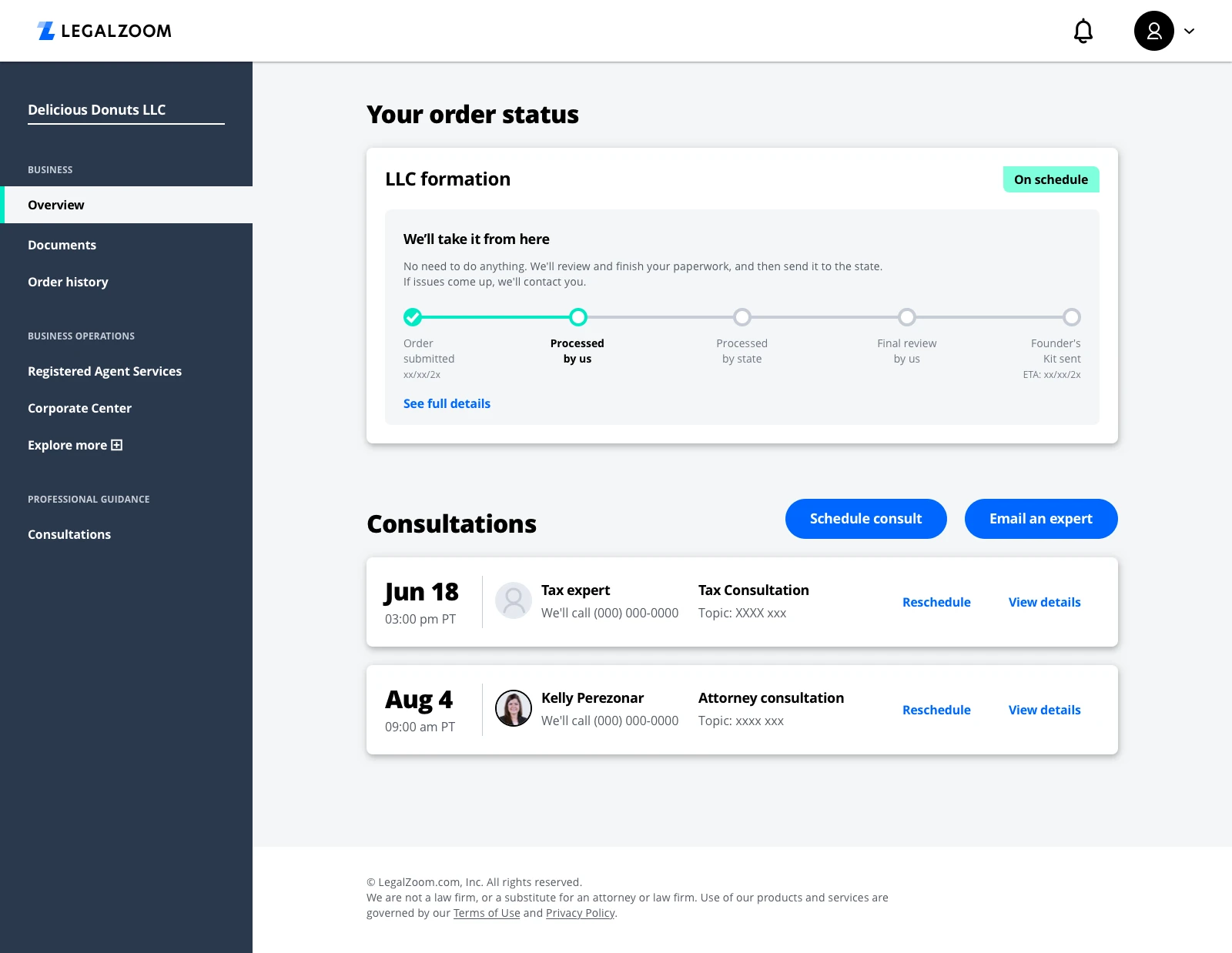
I narrowed the first release to one audience and one primary need: helping new LLC customers track their formation orders. This gave us a high-volume starting point with a defined customer journey while keeping the scope manageable.
2. Link to existing functionality instead of rebuilding everything
Documents, consultations, billing, and other capabilities remained accessible through the legacy application. We deliberately deferred redesigning those experiences so the team could focus on order tracking. Engineering built the new experience on a product-agnostic foundation that could support additional products over time.
3. Roll out incrementally to manage risk
With so many combinations of products, states, and customer scenarios, we couldn’t reliably test every edge case before launch. I planned a controlled rollout using traffic percentages and state-based rules, with a fail safe option to return to the legacy experience if needed. This allowed us to validate the experience in production while limiting risk.
Solution
Outcomes
- 4 months to launch. The first release went live July 7, 2021, reaching all eligible new LLC customers by the end of the week.
- Millions of customers migrated. By November 2021, all customers were routed through the new My Account and we were able to sunset the legacy platforms.
- 6 connected releases in 9 months. Order tracking, Home, Business Workspace, corporation support, Launch Tasks, and checkout account creation expanded the post-purchase ecosystem.
- 40% → 85% adoption among new LLC customers. I identified and shaped a parallel checkout account-creation improvement with the Formations team. It shipped in April 2022, with adoption reaching 85% by early 2023.
By 2023, My Account served approximately 194,000 monthly active customers, with order tracking among its most-used features.
Artifacts
Shaping Document
Where I define the work before the build starts: the problem we’re solving, user stories and acceptance criteria, what’s out of scope, and how we’ll measure success. It gives the team something concrete to question, agree on, and build from.
View document (opens in a new tab)Breadboard
A map of the screens, actions, and paths through an experience. I use it to work through how things connect, spot gaps, and decide what belongs in the first release. It also gives executives a way to follow the details and understand what we’re proposing.
View map (opens in a new tab)